

History & Historical Locations






Art & Literature




Philosophy & Ideology

Transhumanism
Transhumanism is a philosophical movement that advocates for the transformation of the human condition by developing and making widely available sophisticated technologies to greatly enhance human intellect and physiology. More @ Wiki
Interesting Personality: John Burdon Sanderson Haldane

Secular Humanism
Secular humanism is a philosophy or life stance that embraces human reason, secular ethics, and philosophical naturalism while specifically rejecting religious dogma, supernaturalism, and superstition as the basis of morality and decision making. More @ Wiki
Interesting Personality: Sir Julian Huxley

Existentialism
Existentialism is a form of philosophical enquiry that explores the nature of existence by emphasizing experience of the human subject—not merely the thinking subject, but the acting, feeling, living human individual. In the view of the existentialist, the individual’s starting point is characterized by what has been called “the existential angst” (or, variably, existential attitude, dread, etc.), or a sense of disorientation, confusion, or anxiety in the face of an apparently meaningless or absurd world. More @ Wiki
Interesting Personality: Friedrich Nietzsche

Intelligent Design
Intelligent design is a pseudoscientific argument for the existence of God, presented by its proponents as “an evidence-based scientific theory about life’s origins”. Proponents claim that “certain features of the universe and of living things are best explained by an intelligent cause, not an undirected process such as natural selection.” More @ Wiki
Interesting Personality: Stephen C. Meyer

Capitalism & The Profit Motive
Capitalism is an economic system based on the private ownership of the means of production and their operation for profit. Central characteristics of capitalism include private property and the recognition of property rights, capital accumulation, wage labor, voluntary exchange, a price system and competitive markets. More @ Wiki
The profit motive, in the theory of capitalism, is the desire to earn income in the form of profit. Stated differently, the reason for a business’s existence is to turn a profit. The profit motive functions according to rational choice theory, or the theory that individuals tend to pursue what is in their own best interests. Accordingly, businesses seek to benefit themselves and/or their shareholders by maximizing profit. More @ Wiki
Interesting Personality: Adam Smith
Science

Genetic Engineering & CRISPR
Genetic engineering, also called genetic modification or genetic manipulation, is the direct manipulation of an organism’s genes using biotechnology. It is a set of technologies used to change the genetic makeup of cells, including the transfer of genes within and across species boundaries to produce improved or novel organisms. New DNA is obtained by either isolating and copying the genetic material of interest using recombinant DNA methods or by artificially synthesizing the DNA. More @ Wiki
CRISPR (clustered regularly interspaced short palindromic repeats) is a family of DNA sequences found in the genomes of prokaryotic organisms such as bacteria and archaea. These sequences are derived from DNA fragments of bacteriophages that had previously infected the prokaryote. More @ Wiki
Interesting Personality: Jennifer Doudna
Cognitive Science
Cognitive science is the interdisciplinary, scientific study of the mind and its processes. It examines the nature, the tasks, and the functions of cognition (in a broad sense). Cognitive scientists study intelligence and behavior, with a focus on how nervous systems represent, process, and transform information. More @ Wiki
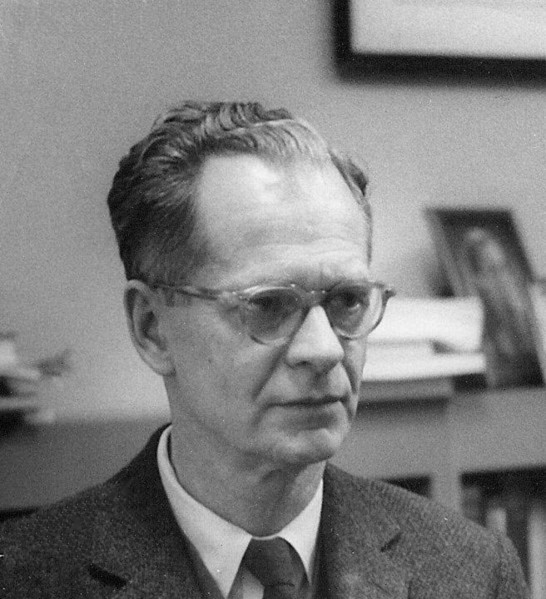
Interesting Personality: Burrhus Frederic Skinner

The Scientific Method
The scientific method is an empirical method of acquiring knowledge that has characterized the development of science since at least the 17th century. It involves careful observation, applying rigorous skepticism about what is observed, given that cognitive assumptions can distort how one interprets the observation. More @ Wiki
Interesting Personality: Rosalind Franklin
Quantum Computing
Quantum computing is the use of quantum-mechanical phenomena such as superposition and entanglement to perform computation. Computers that perform quantum computations are known as quantum computers.Quantum computers are believed to be able to solve certain computational problems, such as integer factorization (which underlies RSA encryption), substantially faster than classical computers. More @ Wiki
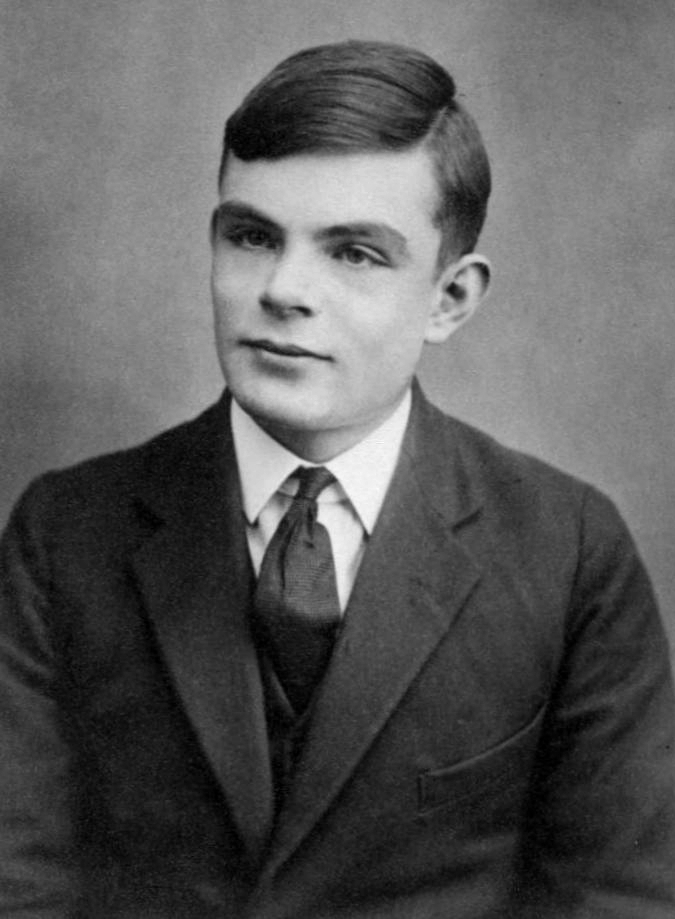
Interesting Personality: Alan Turing
Nonparametric Statistics
Nonparametric statistics is the branch of statistics that is not based solely on parametrized families of probability distributions (common examples of parameters are the mean and variance). Nonparametric statistics is based on either being distribution-free or having a specified distribution but with the distribution’s parameters unspecified. Nonparametric statistics includes both descriptive statistics and statistical inference. More @ Wiki
Interesting Personality: Jean D. Gibbons
Science Fiction
Book 1 Chapter 1 & 4
Floating 3D Projector / Hologram
Size: 6 inch diameter
Purpose: Project information in large spaces
Location: N/A

Book 1 Chapter 8 & most of Book 2
H+ Floating Island City
Size: 10 km radius / depth unknown
Purpose: Main facility and home of Genetic Prisoner Reform Program
Location: Unknown somewhere in the Atlantic Ocean
Inspiration: Various sources






 Metamorphosis Book Series
